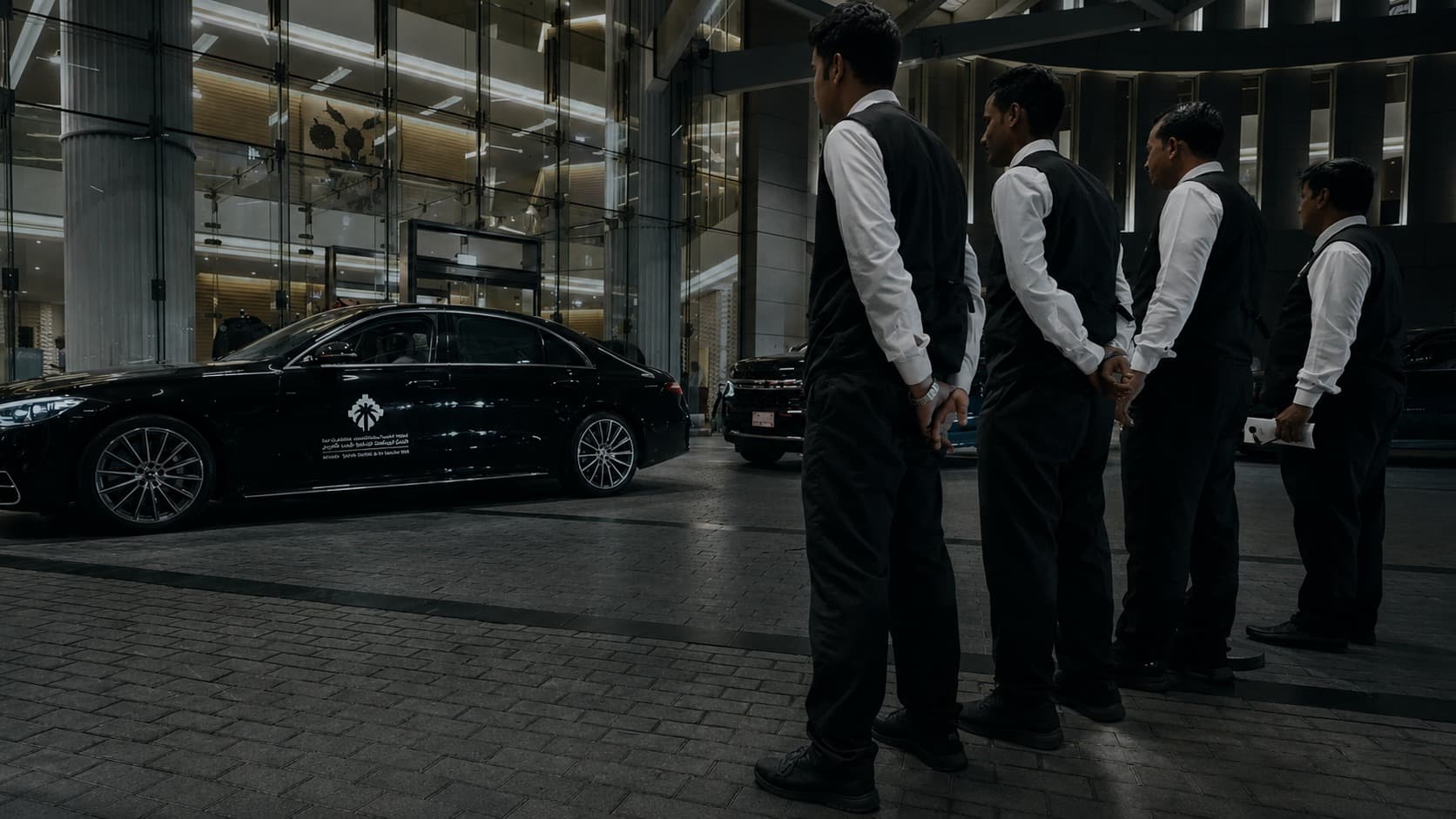
No matter how good the program inside your event is, ten minutes of congestion at the gate is enough to leave guests with a negative first impression before they even reach their seats. Managing entry and exit isn't a secondary detail — it's the first thing every guest actually experiences.
Planning Starts with Capacity Analysis, Not Event Day
Any solid traffic plan starts with studying the venue's capacity and expected attendance weeks before the event, not on the morning of. This analysis is what determines how many gates you need and when to open them — instead of discovering a bottleneck as it's happening.
Separating Entry Routes from Exit Routes
The most common cause of congestion is using the same route for arrivals and departures at the same time. A professional traffic plan assigns separate routes for entry and exit, with parking allocated by carefully calculated capacity — including dedicated areas for VIPs.
Valet as Part of the Hospitality Experience, Not Just Parking
Good valet service isn't just parking a car. It starts the moment a guest is greeted to clear hospitality standards, continues through a ticketing system that guarantees fast retrieval, and ends with documented handover procedures that protect the guest's vehicle.
Field Teams Are What Stop Congestion as It Happens
No matter how solid the plan, you still need traffic marshals on the ground watching actual flow and redirecting it the moment a queue starts forming — rather than waiting for the problem to resolve itself.
The Bottom Line
An event's gate is a guest's first real experience and the last thing they remember on the way out. Investing in traffic planning and valet service matters just as much as investing in the event's content itself.