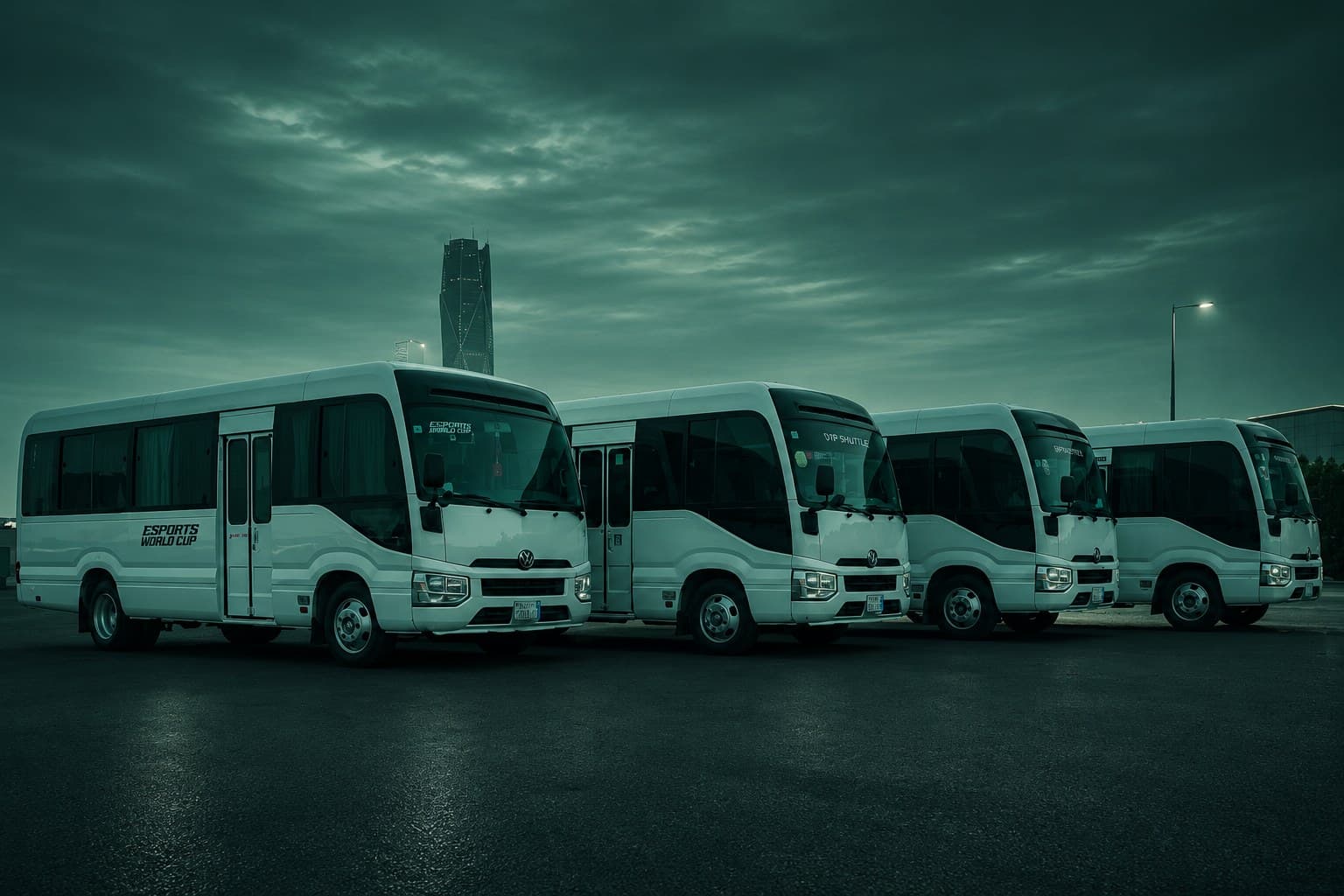
When a conference or event runs longer than a day, group transport stops being a single occurrence and becomes a repeating operation: a morning run from the hotels to the venue, an evening return, and often additional transfers between sessions spread across more than one building. That daily repetition is what makes bus planning fundamentally different from a one-off group transfer.
Size capacity for peak demand, not the daily average
The biggest mistake in bus planning is sizing capacity around the average daily attendance. The real problem shows up at the morning peak, when everyone wants to arrive within the same half hour. The fix is planning for peak-hour capacity, with extra trips genuinely ready to go — not a bare-minimum schedule.
Schedule trips around the event program, not a fixed clock
Buses that depart on a fixed schedule regardless of the event's actual program leave guests either waiting or missing a session. Good scheduling ties bus departures directly to the session program, with enough buffer time between each wave and its arrival point.
Clear pickup and drop-off points that prevent confusion
At major events with several host hotels, every guest needs to know exactly where to stand and when, without having to ask. Clear signage, a field coordinator at every point, and a pre-distributed schedule prevent the chaos that usually happens at the pickup point — not during the ride itself.
Certified drivers and standby buses that are actually ready
A mechanical fault or a late driver is a minor annoyance on an ordinary day, but on a packed conference day it can throw off dozens of guests' schedules. That's why a backup bus and driver need to be genuinely staged on-site, not just an emergency phone number.
The Bottom Line
Bus transport for a multi-day event isn't one trip that repeats — it's an operational system that needs peak-demand capacity planning, program-linked scheduling, clear pickup points, and standby resources, all worked out before the first bus ever departs.